
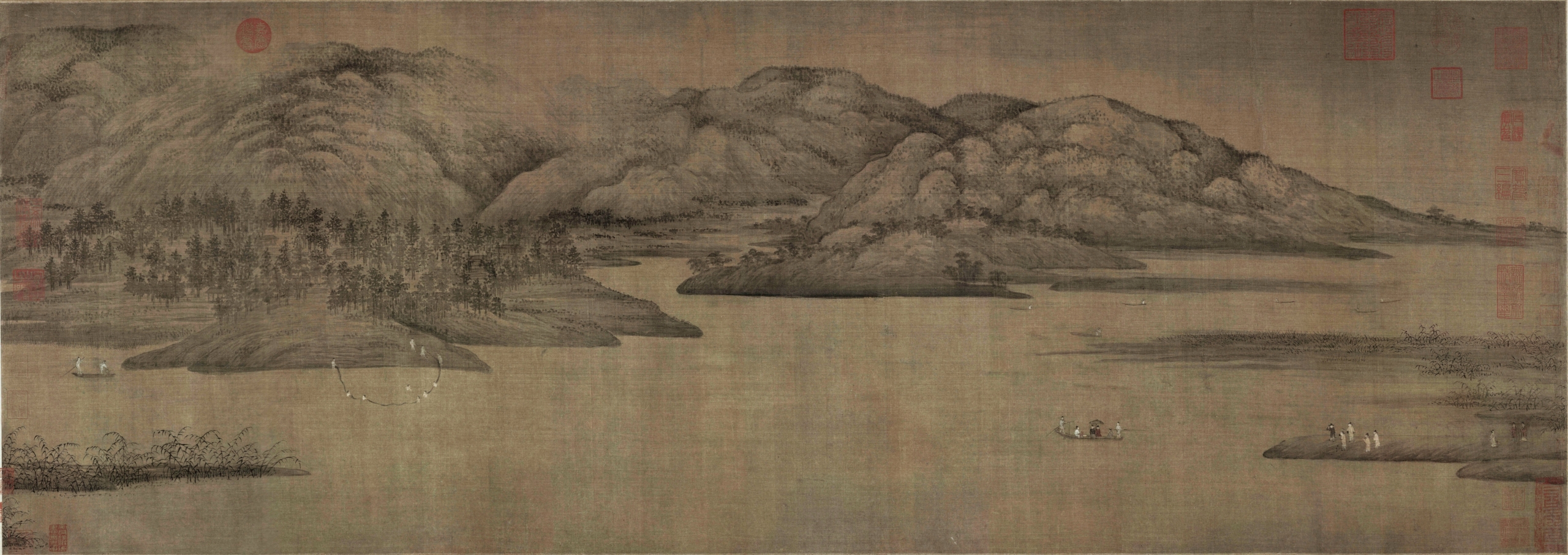
Exploring Eastern philosophy and its teachings on harmony, self-awareness and human connection, and how we can apply them to our everyday lives.
I’ve always seemed to notice a different kind of calmness among people from Eastern cultures, so I wanted to dive deeper into their traditions and discover which practices could improve our daily lives. More importantly, how can we incorporate Eastern philosophical teachings into our own lives to find peace and balance, even amidst the stresses of everyday life?
Introduction to eastern philosophy
Both Eastern and Western philosophy have tried to answer some of the biggest questions about human existence: What does it mean to be human? What is the meaning of life? Although they share similar questions, their answers have often been shaped by different cultures, traditions and social conditions.
Eastern philosophy includes several traditions, such as Taoism, Buddhism, Hinduism and Confucianism, which developed across different parts of Asia, particularly in countries like China and India.
One of the main differences between Western and Eastern ways of thinking is how they approach the individual and their relationship with the world. Western cultures have traditionally placed greater importance on individualism, encouraging people to think independently, question existing ideas and build their own paths through personal effort. In contrast, many Eastern traditions tend to emphasize collectivism, focusing on our relationships with others and the communities we belong to. It’s less about the I and more about the we.
Another interesting difference is how we perceive the world around us. While Western thinking often focuses on individual objects and their characteristics, Eastern perspectives tend to pay more attention to the bigger picture, considering the environment and the relationships that connect everything together. This way of thinking reflects the importance of harmony, not only with other people but also with nature.
Personally, I believe that, as with most things in life, balance lies somewhere in between. Both perspectives have something valuable to offer, and perhaps we could learn from one another rather than trying to decide which approach is better.
The Landscape and Lao Tzu
Have you ever noticed how small human figures appear in traditional Chinese landscape paintings? They’re often surrounded by enormous mountains, rivers and forests, almost disappearing into the scenery. This reflects an interesting idea: we are much smaller than we think. The world is far older and more mysterious than our ambitions, worries and plans, yet we often get so caught up in our own lives that we forget to appreciate the bigger picture.
This way of looking at the world is closely connected to Daoism, an ancient Chinese philosophical tradition whose teachings are often attributed to Lao Tzu, also known as Laozi, meaning “Old Master”. Daoism takes its name from the Dao, which translates to “the Way”. It represents the mysterious source and natural order of existence, something that cannot be fully explained through words. As Lao Tzu famously wrote, “The Dao that can be told is not the eternal Dao.” Although the Dao is understood as a universal principle, everyone may experience and interpret it differently. Rather than trying to define it, Daoism encourages us to experience it by living in harmony with the world around us.
An ancient Chinese allegory, known as The Vinegar Tasters, illustrates the different perspectives of three influential figures: Confucius, Buddha and Lao Tzu. In the story, all three taste vinegar, but each has a different reaction. Confucius finds it sour, Buddha finds it bitter, while Lao Tzu finds it sweet. Despite recognizing the difficulties and imperfections of life, Lao Tzu sees an underlying harmony in the world, guided by the Dao. But how can we actually live in harmony with it?
The art of letting go
One of the central ideas of Daoism is wu wei, often translated as “effortless action”. This doesn’t mean doing nothing, but rather learning to act without forcing things, accepting the natural flow of life instead of constantly trying to control it. Think about how much time we spend rushing from one place to another, worrying about the future or trying to make everything happen according to our plans. Yet some things simply need time. Just like leaves falling in autumn, certain things happen at their own pace.
Daoism also encourages us to make room for stillness. Sometimes, we become so busy thinking about what comes next that we forget to experience what’s happening right in front of us. Taking a moment to observe our surroundings, appreciate nature or simply be present can help us reconnect with the world, and perhaps with ourselves too. We spend so much time worrying about who we want to become that we sometimes forget to appreciate who we already are. Our ambitions and expectations can get in the way of understanding ourselves, while learning to be more receptive to the world around us might help us discover what truly matters.
Learning from nature
Nature plays an important role in Lao Tzu’s teachings. He often uses natural elements to describe human virtues, particularly water, which benefits everything around it without competing or demanding anything in return. Rather than fighting against obstacles, water adapts to its surroundings and continues flowing. Beyond its philosophical teachings, Daoism also includes practices such as meditation, breathing exercises and gentle movements, traditionally believed to improve the flow of qi, or vital energy, and promote a longer, healthier life.
Confucius: The Importance of Rituals, Family and Moral Growth
Confucius was one of the most influential philosophers in ancient China, and his teachings were collected in The Analects, a collection of sayings and conversations written down by his followers.
One of the most interesting aspects of his philosophy is the importance he placed on rituals, or what he called ritual propriety. When we think of rituals, we often imagine religious ceremonies or ancient traditions, but they can actually be part of our everyday lives. Think about decorating the Christmas tree with your family, celebrating a birthday or exchanging wedding vows. These gestures might seem simple, but they carry a deeper emotional meaning. Rituals help us express our intentions, strengthen our relationships and understand how to behave towards one another. Sometimes, a familiar gesture can communicate something that words alone cannot.
Respect, wisdom and the art of becoming better
Another important aspect of Confucian philosophy is the respect we show towards our parents, known as filial piety. Confucius believed that our moral education begins within the family, through the way we treat those closest to us. Being compassionate and grateful isn’t just about having good intentions, but putting them into practice. It can be as simple as remembering your mother’s birthday or making time for your family. In many ways, how we treat our loved ones shapes how we treat the rest of the world.
Confucius also valued respecting people whose wisdom and experience could guide us. As he stated, “Let the ruler be a ruler, a subject a subject, a father a father and a son a son.” Although this might sound rigid today, it reminds us of the importance of humility and recognizing that others might have something to teach us.
Confucian philosophy also identifies five constant virtues: benevolence, righteousness, ritual propriety, wisdom and integrity. These qualities require continuous practice. Confucius believed that becoming a better person takes patience and effort. Inspiration and creativity are important, but real growth often comes from our everyday habits and the way we treat others.
The beauty of being vulnerable
In traditional Chinese poetry, expressing emotions such as sadness, love and longing was often seen as a sign of sensitivity rather than weakness. Poets openly described their tears, especially when remembering loved ones or saying goodbye to their families. In one poem, a man watches a son leaving his parents and is reminded of his own painful farewell, bringing tears to his eyes. This simple scene shows how someone else’s experience can awaken our own emotions. Perhaps there’s something we can learn from this openness: allowing ourselves to be vulnerable doesn’t make us weaker but it can help us connect with others.
Immagine di copertina: Dong Yuan, Public domain, via Wikimedia Commons


