
A reflection on politics through the words of Martha Nussbaum and Hannah Arendt.
I’ve always considered myself an empathetic person, and this aspect of my personality has often led me to wonder why love, compassion, and the genuine desire to make a country or a city a better, more humane place are not at the heart of political beliefs. Why does politics so often seem to revolve around power and division rather than our shared humanity? These questions bring me to two influential political philosophers: Hannah Arendt and Martha Nussbaum. Although they approach the relationship between politics and emotions from different perspectives, both explore the role of human experience in political life. Their ideas invite us to reflect on whether empathy, love, and our responsibility towards others should play a greater role in shaping our political values.
Martha Nussbaum, Political Emotions
In Political Emotions, Martha Nussbaum explores the importance of emotions in politics. She argues that justice and laws are not enough to create a fair and democratic society. Even when a country has laws based on equality and human rights, an important question remains: what makes people want to protect these values, especially when they have to put other people’s needs before their own?
According to Nussbaum, emotions such as love, compassion and hope are essential because they help us care about people outside our families and communities. However, we often feel more compassion for people we know or who are similar to us. For this reason, politics should encourage people to care about society as a whole, not just those close to them.
Nussbaum believes that education, art and culture can help people develop these feelings and understand different perspectives. She also supports the idea that people with different religions, beliefs and backgrounds can live together by sharing values such as equality and respect.
In the end, Nussbaum suggests that a fair society cannot survive only because its laws are right. People must also feel emotionally connected to the values they want to protect. In this way, love becomes more than a personal feeling: it can inspire people to care for others and work together to build a better society.
Hannah Arendt, Love for the World and Political Responsibility
For Hannah Arendt, politics is closely connected to our responsibility towards the world we share with others. In The Human Condition (Vita Activa), she identifies three main human activities: labor, work and action. Labor is related to our basic needs, work involves creating things, while action allows people to participate in society, express their freedom and communicate with others.
According to Arendt, politics exists because we are all different individuals who share the same world. Each person has their own ideas, experiences and opinions, and everyone has something unique to contribute. She believes that freedom is not just something we experience individually, but also something we express when we participate in public life.
This idea is connected to the concept of amor mundi, which means “love for the world.” For Arendt, this love is not a romantic feeling, but a sense of responsibility towards the world and the people who live in it.
Arendt also explores the importance of independent thinking through her studies of totalitarianism and the banality of evil. By examining the actions of Adolf Eichmann, she explains how people can become involved in terrible injustices when they stop thinking critically and simply follow orders.
For this reason, caring about the world also means questioning authority, refusing to remain indifferent and taking responsibility for our actions. From Arendt’s perspective, politics should be a way for people to protect the world they share, while respecting freedom and individual differences.
Ezra Klein and Ross Douthat, The Importance of Political Dialogue
Another important topic in the conversation between Ezra Klein and Ross Douthat is how we communicate with people who have different political opinions. Douthat, a conservative journalist who has often written for liberal readers, believes that good political communication starts with understanding why people think differently from us. Instead of assuming that those who disagree with us are wrong or have bad intentions, we should try to understand their point of view.
This does not mean changing our own beliefs, but accepting that people can have different opinions while still caring about important values. Klein also explains how political communication has changed because of social media. In the past, political writers often discussed their ideas through blogs, even when they disagreed. Today, however, social media often encourages arguments rather than meaningful conversations, as people tend to look for support from those who already agree with them.
Klein also makes an important distinction between persuasion and affirmation. Persuasion means trying to understand different opinions and possibly changing someone’s mind, while affirmation simply means supporting beliefs that people already have.
This leads to an interesting question: do we discuss politics because we want to prove that we are right, or because we genuinely want to understand others and improve society?
Having meaningful political conversations requires empathy, patience and an open mind, especially when discussing sensitive topics. In the end, Klein and Douthat suggest that political differences do not always have to divide us. Instead, respectful discussions can help us question our own beliefs, understand society better and remember that, despite our differences, we are all human.
Then, what difference do we want to make in the world?
Perhaps, in the end, politics should not only be about defending our own beliefs, but also about understanding others and taking responsibility for the world we share. We may not always agree, but we can still choose to approach each other with empathy, respect and an open mind. After all, creating a better society starts with the way we treat one another. This leaves us with two important questions: What difference do we want to make in the world? And, most importantly, how do we want to make it?
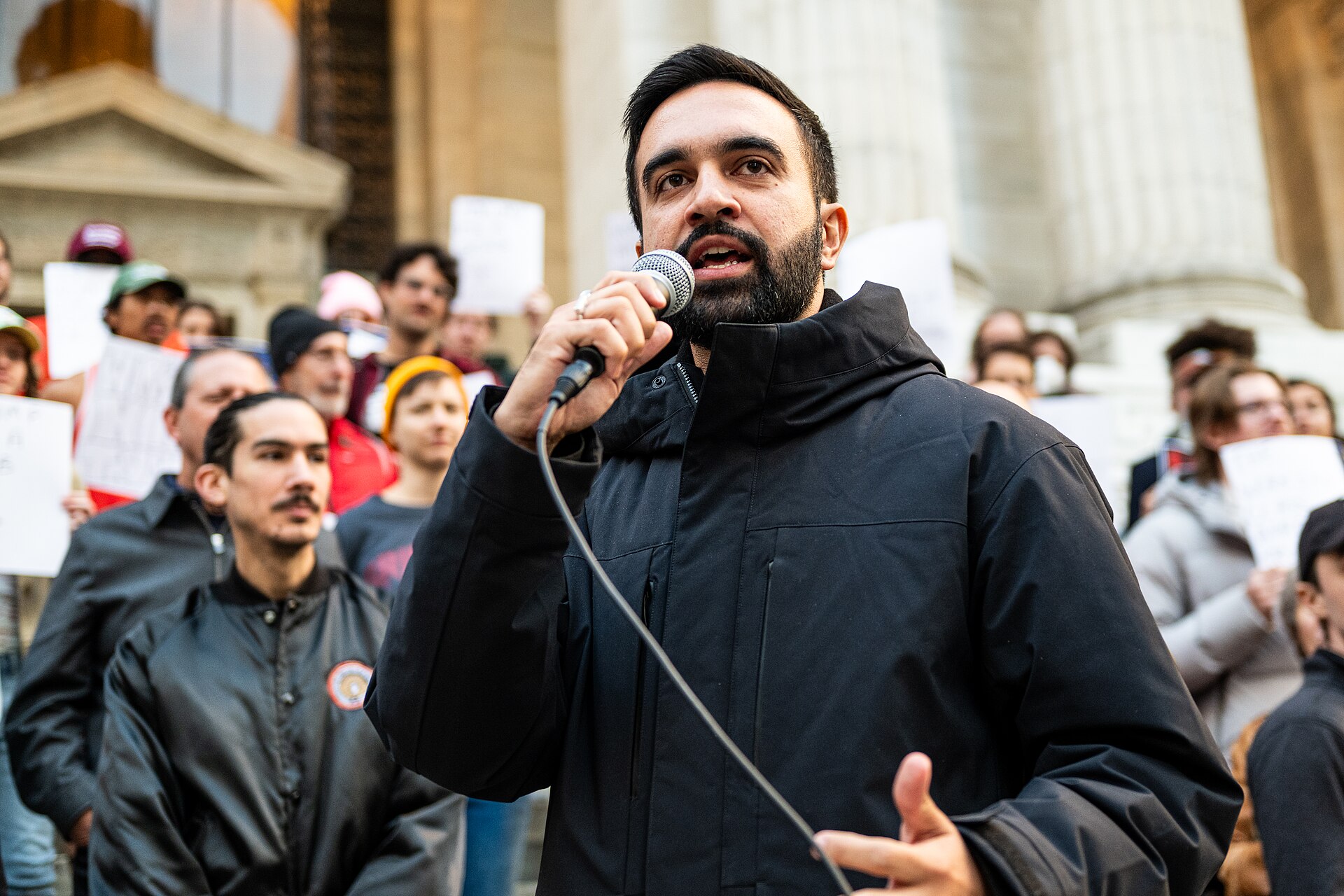
Immagine di copertina: Bingjiefu He, CC BY-SA 4.0 https://creativecommons.org/licenses/by-sa/4.0, via Wikimedia Commons


